Chapter 5: Treatment of a Mechanical Joint Dysfunction
IN THIS LESSON
The achievement of full micro joint movement will lead to full and pain free gross functional movement.
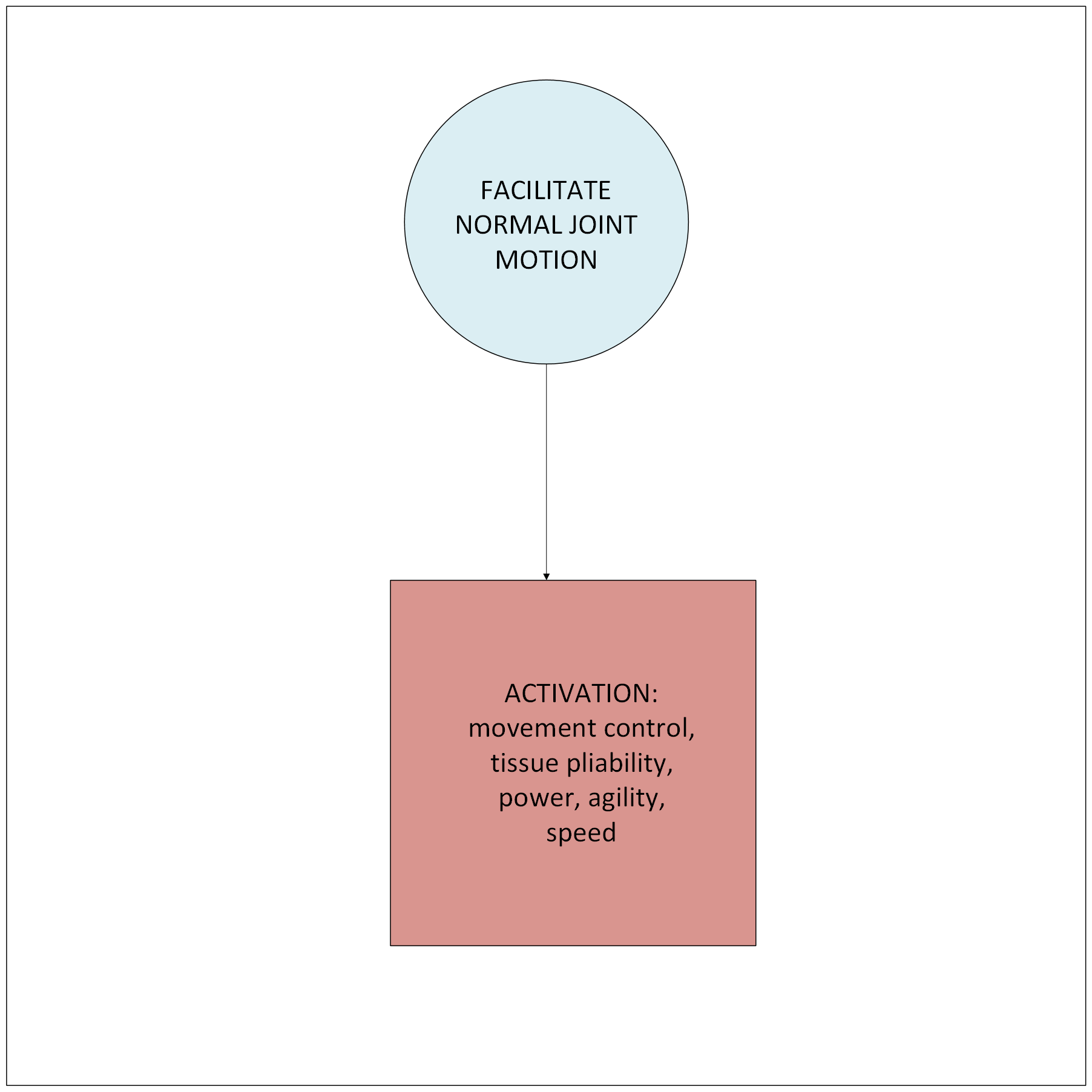
Once joint movement is restored and the pain, spasm and inhibition have resolved, the next step is to build trunk control, followed by power and agility and then speed to decrease mechanical vulnerability. Always revisit the joint mechanics to assure that trunk control is increasing where the patient is mechanically correct.
It is important not to treat the symptoms but to treat the underlying mechanical dysfunction causing the symptoms. Use the signs and symptoms throughout treatment to assess and demonstrate change over time: signs being what the physical therapist notes and symptoms being what the patient experiences.

-
Exercise is an adjunct to full, functional, painless movement. Muscle exercises alone cannot effectively restore lost function to a joint in which there is intrinsic dysfunction. When the joint is mechanically incorrect, exercises are either attempting to stretch the spasm or strengthen the inhibition.
Specific exercises should progress from mobility to control to progressive strengthening, including power. Control of movement for a specific activity must be mastered before another activity is added.
-
Trunk control is defined as the ability to maintain neutral posture while completing an activity. Movement is the means by which context-dependent problems are solved. Skill is defined as the degree of accuracy, consistency and efficiency of movement.
Skilled movement patterns are achieved by the motor planning regions of the cerebral cortex as they interact with the environment by way of afferent neural input. This is defined as motor learning. As motor learning takes place, trunk control is being achieved. The more trunk control one has, the greater the ability to complete an activity without being mechanically vulnerable.
Golgi tendon organs monitor change in muscle tension and movement. The summation of these mechanoreceptors’ input at the spinal cord allows for interpretation of joint position and movement by the brain. Properties of the Golgi receptor gave rise to the term proprioception which describes the awareness and extraction of information regarding of posture, movement, and changes in equilibrium.
Exercises to increase trunk control should begin after full mobility is achieved, because proper joint function and efficiency lead to adequate muscle length and extensibility.
All movement begins at the lumbo-pelvic region and there are 29 pairs of muscles that support the lumbo-pelvic and hip complex. Trunk control exercises should then begin with these supporters. The gluteal muscle is a main stabilizer and is mentioned in the literature as a weakness during injury. Fredrickson states that runners prone to the iliotibial band syndrome often have weakness in their hip abductors that predisposes them to increased stress on the iliotibial band.
Trunk control exercises should emphasis the need to solve and master more complex movement tasks as easier ones are accomplished. The progression should move from stable activities into building power, agility and speed, all while maintaining trunk control. The exercises should progress from stable to unstable, slow to fast, small movements to large movement, and simple movements to dynamic movements.
The movements should be functional and relate directly to the activity wanting to be achieved. Work on these movements in neutral spine posture and as the easier exercise is achieved, make it more difficult by increasing the weights, the repetitions, the speed and the movement.
Always assure that the movement is achieved in neutral spine posture. If the exercise cannot be achieved then the variables of the exercise have to decrease, like weight, reps, movement, to allow for success. Always end with the full activity being practiced at full speed as the motor learning pattern is only fully learned when the entire activity is performed.
-
Upper quadrant trunk control should begin with a push-up. This might be on a wall, or at an angle. The angle can then decrease overtime as 30 push-ups are easily achieved in neutral spine position. Planks are also a way to begin to build upper trunk stability. The time holding the plank and the base of support can change overtime as the exercise is successful.
-
To build lower trunk control, the easiest place to start is a controlled squat with the feet under the hips and over the ankles. If the squat cannot be controlled with knees out and over the ankles, then holding on will increase stability and allow for control of the movement. When 30 squats holding on are mastered, then begin to let go.
When squats are too easy then progress to lunges, jump squats, squats with weights etc. Then progress to walking lunges, sideway lunges, lunges on a step etc. There are an endless number of exercises that can be performed. The progression and functionality of the exercise is the most important.
-
Power is the ability to recruit enough motor units per muscle fiber to accomplish a specific activity. Power is “defined as the rate that work is being done (power = work/time.) This is accomplished with motor learning and an increase in size of individual muscle fibers.
Power training is the opposite of endurance, high weight and low repetition. It is one set of high weight to complete muscle “failure,” when the brain must learn to recruit more units per muscle fiber to accomplish the task. Concentric and eccentric lifts must be brought to failure. You will work from big muscle group to small and start with upper body, ending with lower body lifts. There must be 48 hours of rest between each session. The sessions consist of one set each lift with no rest in between. The machines found at gyms work great for power lifting as they are stable, and predictable.
-
Musculoskeletal tissue requires the stimulus of nondestructive stresses to maintain its health. Nondestructive stresses refer to the movements and weight-bearing activities within the physiological limits of the musculoskeletal tissue. Immobilization results in changes of tissue including loss of water, decreased protyoglycan concentrations and a decrease of overall strength. Musculoskeletal tissue weakens from disuse and overuse. There is a healthy balance between conditioning to keep tissue healthy and over-conditioning, which results in consequences that can be just as destructive as a sedentary lifestyle.
Conditioning takes greater than three months to change normal physiology. It takes 4,000 to 6,000 repetitions to remodel tissue. Balance is directly linked to conditioning. As a person becomes more conditioned, their performance improves. It has been shown that as a person increases athletic performance the injury rate decreases. Conditioning keeps us more stable.
It takes two to six weeks to get used to a new activity. There are days when overall the body will be tighter and a longer warm-up will be needed. Tissue may also feel tighter or looser based on variables we cannot change like barometric pressure, hormones and viruses. Be forgiving with your workouts. Working your way back to your normal routine after an injury may cause increased fatigue so moderate progression is best.