
Chapter 6: Recovery Guidelines and Documentation
IN THIS LESSON
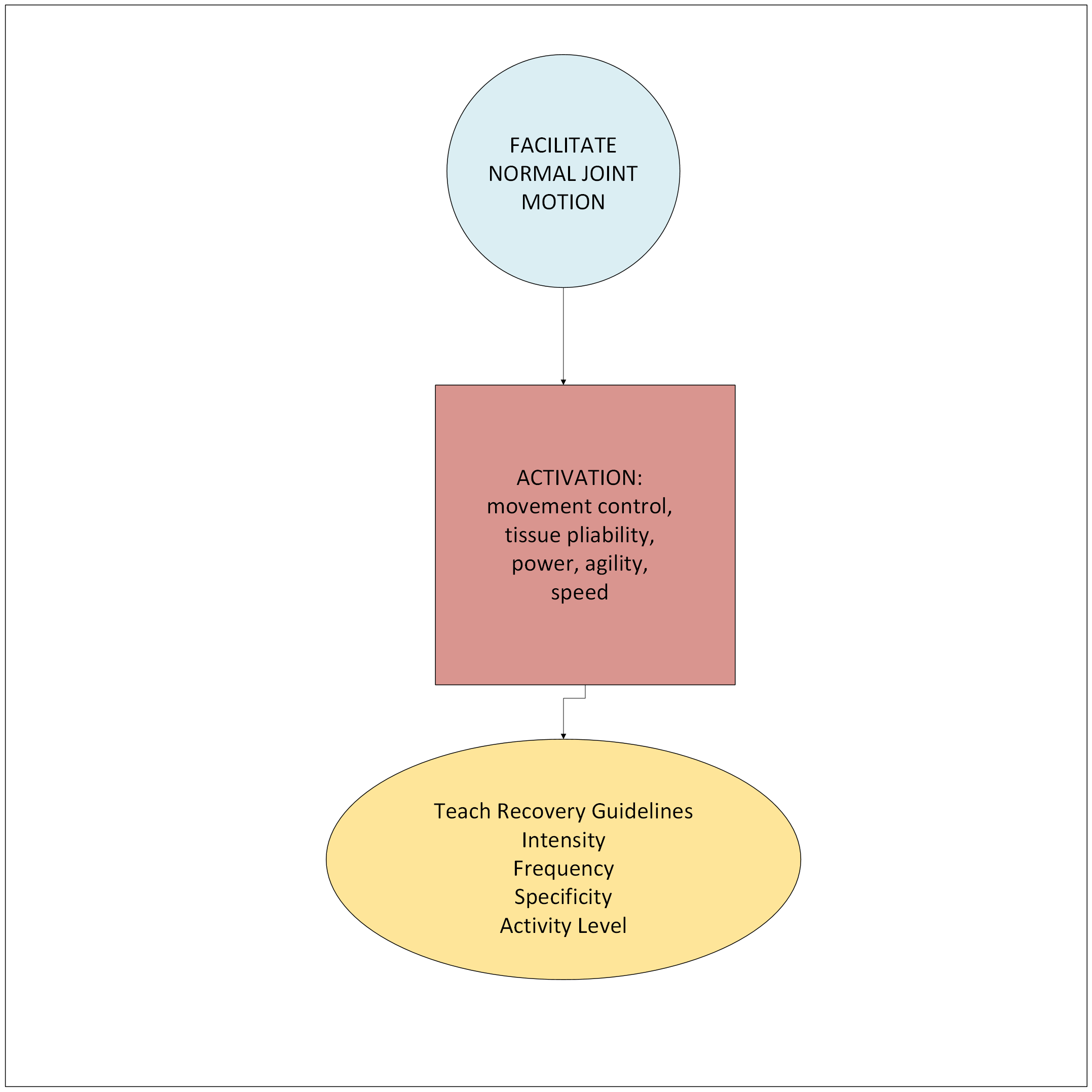
It is rare that we can take pain away in one treatment, but yes this does happen. In the majority of cases we must teach the client how to monitor change over time, as all good things come with time. There will be a chance of recovery irritation that will last 24 to 72 hours and will result in soreness or stiffness. Heat will help keep the changing tissue pliable.
Irritation decreases from a sharp pain to a soreness, then a stiffness, and finally a fatigue. It decreases from generalized to localized and from constant to an intermittent annoyance. Sleep will become easier as irritation decreases, but morning irritation is usually the last to calm down. Morning pain is one of the last to recover due to a sustained period of lack of activity. Activity level will increase as irritation decreases in intensity and frequency.

-
Teaching recovery guidelines is a crucial aspect of physical therapy because it allows the therapist to gage change over time, empowers patients to take an active role in their healing process, promotes long-term independence. Without this education, patients may not understand the "why" behind their treatment, leading to poor adherence and suboptimal outcomes.
-
When a physical therapist explains overall recovery plan, patients are more likely to stay engaged and motivated. This understanding builds a sense of autonomy, shifting the patient's mindset from a passive recipient of care to an active participant in their own recovery.
-
Measuring how a movement dysfunction changes over time is the key to shifting the entire rehabilitation experience. When a physical therapist consistently tracks change over time, the conversation with the patient moves away from the discussion of pain, which remember is an experience, and focuses instead on progress.
This immediate validation changes the trajectory of recovery, anchoring the dialogue on a positive note and keeping the patient engaged with the ultimate goal: a return to a full exercise routine.
Furthermore, this focus on change over time ensures accountability; a clear lack of progress allows the therapist to quickly recognize when a movement dysfunction is not only a mechanical joint dysfunction and a timely referral to an MD can be made—ideally, within one to three visits—to prevent unnecessary delay in the patient's care.