
the F.A.S.T Approach™
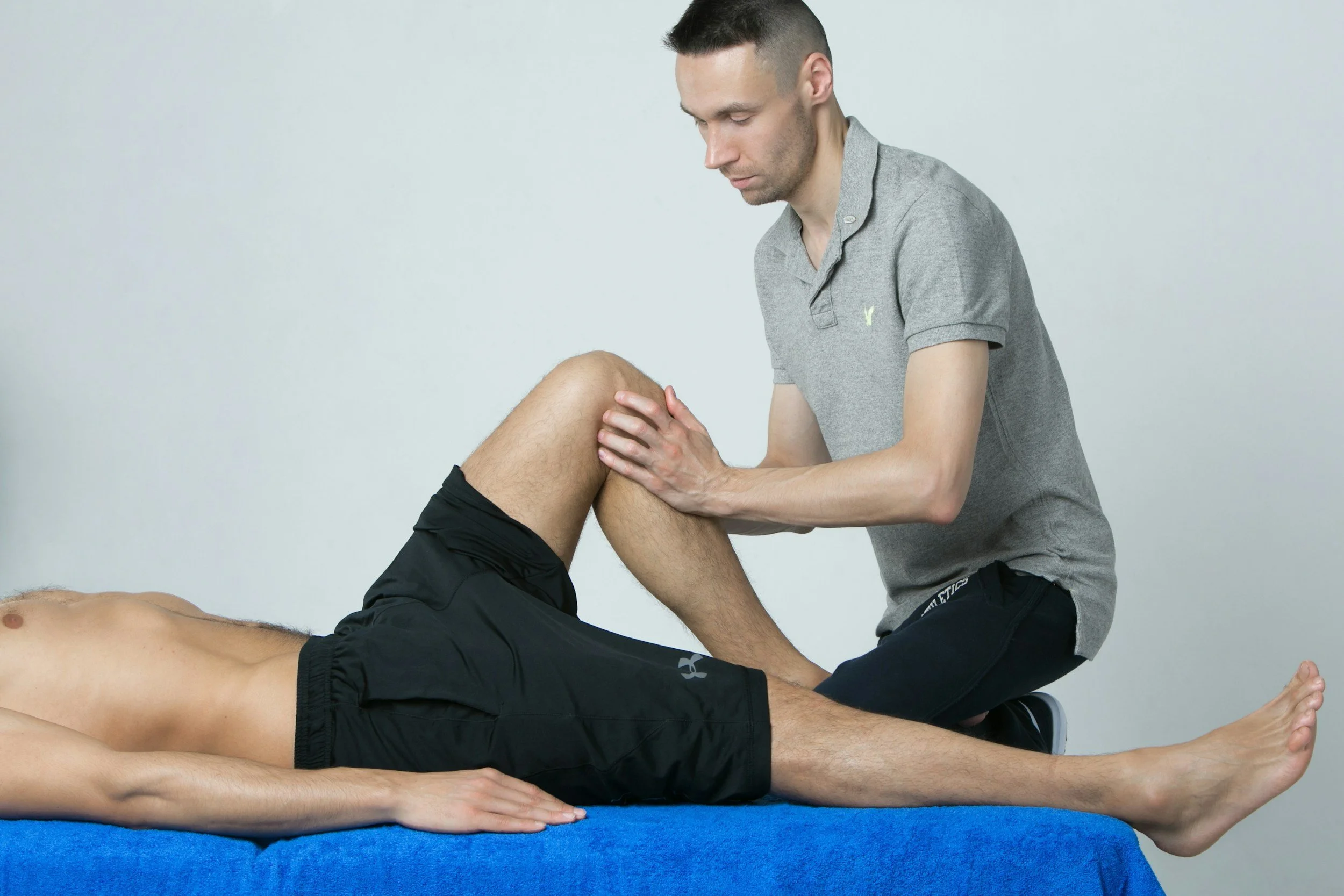
The F.A.S.T Approach™ is a proprietary system for physical therapists, designed to improve the consistency and accuracy of clinical reasoning, treatment and recovery. It empowers clinicians to quickly differentiate diagnoses and accelerate treatment.
At its core, the F.A.S.T Approach™ provides a structured framework for rapidly and precisely addressing the root cause of a patient's movement limitations. This system moves beyond a symptom-based approach, focusing instead on targeted evaluation and treatment that streamlines the entire process.
The F.A.S.T Approach™ revolutionizes physical therapy by addressing the root cause of pain from a mechanical movement dysfunction. The result? Pain-free movement, increased activity levels, and the ability to Play Every Day!
-
Non-Disclosure Agreement
You will be participating in a masterclass that contains copyrighted and patented material.
You will be participating in a masterclass that contains copyrighted and patented material.
-
-
Lesson 1.1: What is the F.A.S.T Approach™?
At its core, the F.A.S.T Approach™ provides a structured framework for rapidly and precisely addressing the root cause of a patient's movement limitations. This system moves beyond a symptom-based approach, focusing instead on targeted evaluation and treatment that streamlines the entire process.
At its core, the F.A.S.T Approach™ provides a structured framework for rapidly and precisely addressing the root cause of a patient's movement limitations. This system moves beyond a symptom-based approach, focusing instead on targeted evaluation and treatment that streamlines the entire process.
-
Lesson 1.2: How We Move
Our understanding of human movement is key to recognizing why a system is needed to address a movement dysfunction. In this lesson, we'll explore the foundational principles of how we move, setting the stage for learning the F.A.S.T Approach™, a framework for diagnosing and treating movement dysfunction.
Our understanding of human movement is key to recognizing why a system is needed to address a movement dysfunction. In this lesson, we'll explore the foundational principles of how we move, setting the stage for learning the F.A.S.T Approach™, a framework for diagnosing and treating movement dysfunction.
-
Lesson 1.3: The Movement System
The movement system is a complex physiological network where the nervous system acts as the primary architect, coordinating sensory input and motor output to produce functional motion.
The movement system is a complex physiological network where the nervous system acts as the primary architect, coordinating sensory input and motor output to produce functional motion.
-
Lesson 1.4: Neural Control of Movement
At its simplest, Neural Control of Movement is the process by which the central nervous system (CNS) interprets sensory information, formulates a plan, and sends electrical signals to muscles to produce a physical action. It is the foundation of the movement system and why the F.A.S.T Approach is so effective.
At its simplest, Neural Control of Movement is the process by which the central nervous system (CNS) interprets sensory information, formulates a plan, and sends electrical signals to muscles to produce a physical action. It is the foundation of the movement system and why the F.A.S.T Approach is so effective.
-
Lesson 1.5: Movement Dysfunction
A movement dysfunction is defined as any impairment in the ability to effectively plan, execute, or regulate a motor task.
A movement dysfunction is defined as any impairment in the ability to effectively plan, execute, or regulate a motor task.
-
Lesson 1.6: Assumptions of Pain
Understanding that pain is a protective signal rather than a damage meter is the first step in correcting movement dysfunctions.
Understanding that pain is a protective signal rather than a damage meter is the first step in correcting movement dysfunctions.
-
Lesson 1.7: Movement Evaluation
The F.A.S.T Approach sets the system for evaluating and differentiating Movement Dysfunction.
The F.A.S.T Approach sets the system for evaluating and differentiating Movement Dysfunction.
-
Lesson 1.8: SOAP Note Revamped
We will use the original SOAP note and go beyond data collection to create a dynamic, useful tool.
We will use the original SOAP note and go beyond data collection to create a dynamic, useful tool.
-
Lesson 1.9: Your Case Study
Bob has shoulder pain - can you fix his shoulder pain in less than 3 visits? If you answered NO, the F.A.S.T Approach is for you.
Bob has shoulder pain - can you fix his shoulder pain in less than 3 visits? If you answered NO, the F.A.S.T Approach is for you.
-
-
-
Lesson 2.1: Five Movement Dysfunctions
Every movement dysfunction can be categorized in these 5 buckets.
Every movement dysfunction can be categorized in these 5 buckets.
-
Lesson 2.2: Soft Tissue Dysfunction
A soft tissue dysfunction is an impairment or abnormal change in the function of soft tissues, such as muscles, tendons, ligament and organs. These dysfunctions can lead to pain, stiffness, and a reduced range of motion.
A soft tissue dysfunction is an impairment or abnormal change in the function of soft tissues, such as muscles, tendons, ligament and organs. These dysfunctions can lead to pain, stiffness, and a reduced range of motion.
-
Lesson 2.3: Peripheral Nerve Dysfunction
A peripheral nerve dysfunction will present with three specific signs. It is important not to miss these three signs.
A peripheral nerve dysfunction will present with three specific signs. It is important not to miss these three signs.
-
Lesson 2.4: Systemic Inflammatory Process
When we suggest a systemic inflammatory process we are discussing a rheumatological phenomenon, an immune system deficiency.
When we suggest a systemic inflammatory process we are discussing a rheumatological phenomenon, an immune system deficiency.
-
Lesson 2.5: Osteoarthritic Change
Osteoarthritic change refers to the degenerative process at a single joint that involves the breakdown of the cartilage that cushions the ends of bones.
Osteoarthritic change refers to the degenerative process at a single joint that involves the breakdown of the cartilage that cushions the ends of bones.
-
Lesson 2.6 : Mechanical Joint Dysfunction
Mechanical joint dysfunction appears as a unilateral decrease of movement accompanied by increased muscle tone, muscle tightness, and muscle inhibition.
Mechanical joint dysfunction appears as a unilateral decrease of movement accompanied by increased muscle tone, muscle tightness, and muscle inhibition.
-
Lesson 2.7: Revisiting Your Case Study
Bob has shoulder pain - You now know there are five movement dysfunction buckets Bob’s shoulder pain can fit into. Where will you go from here?
Bob has shoulder pain - You now know there are five movement dysfunction buckets Bob’s shoulder pain can fit into. Where will you go from here?
-
-
-
Lesson 3.1: Six Differentials
Differentiating a diagnosis before treatment is crucial because it ensures you address the root cause of a problem rather than just its symptoms. Without a clear diagnosis, treatment is a guessing game that can be ineffective, waste time, and potentially worsen the condition.
Differentiating a diagnosis before treatment is crucial because it ensures you address the root cause of a problem rather than just its symptoms. Without a clear diagnosis, treatment is a guessing game that can be ineffective, waste time, and potentially worsen the condition.
-
Lesson 3.2: Subjective Differential
We can take what people say, and how they describe their story, to give us information about the differential.
We can take what people say, and how they describe their story, to give us information about the differential.
-
Lesson 3.3: Neurological Differential
We shoulder never miss the 3 specific neural signs. It is an easy place to begin our differential of a movement dysfunction.
We shoulder never miss the 3 specific neural signs. It is an easy place to begin our differential of a movement dysfunction.
-
Lesson 3.4: Palpation Differential
We can use our skilled hands and feel the tissue for information that will guide our differential.
We can use our skilled hands and feel the tissue for information that will guide our differential.
-
Lesson 3.5: Muscle Resistance Differential
We will take what we learn from a manual muscle test, define the findings a bit further and use the findings to localize our differential. Yes, this is important.
We will take what we learn from a manual muscle test, define the findings a bit further and use the findings to localize our differential. Yes, this is important.
-
Lesson 3.6: Active vs Passive ROM Differential
We can actually use what we learn from active motion testing and compare it to what we learn from passive motion testing and glean valuable information for our differential. Find out how.
We can actually use what we learn from active motion testing and compare it to what we learn from passive motion testing and glean valuable information for our differential. Find out how.
-
Lesson 3.7: End Feel Differential
We will get to the end ranges of passive gross motion and use the end feel information to guide our differential. This is also very important.
We will get to the end ranges of passive gross motion and use the end feel information to guide our differential. This is also very important.
-
Lesson 3.8: Differential Diagnosis of a Movement Dysfunction
Differentiating a movement dysfunction with precision and consistency on every visit is a skill that allows you to move beyond guessing and focus on the true cause of a patient's movement dysfunction.
Differentiating a movement dysfunction with precision and consistency on every visit is a skill that allows you to move beyond guessing and focus on the true cause of a patient's movement dysfunction.
-
-
-
Lesson 4.1: Differentiating Bob's shoulder pan
This is how you differentiate Bob’s shoulder pain in no time.
This is how you differentiate Bob’s shoulder pain in no time.
-
Lesson 4.2: Differentiation for Bob - Subjective
We will continue the Case Study of Bob and his shoulder pain and we will differentiate our Subjective findings.
We will continue the Case Study of Bob and his shoulder pain and we will differentiate our Subjective findings.
-
Lesson 4.3: Differentiation for Bob - Neural Signs
We will continue the Case Study of Bob and his shoulder pain and we will differentiate our Neural Sign findings.
We will continue the Case Study of Bob and his shoulder pain and we will differentiate our Neural Sign findings.
-
Lesson 4.4: Differentiation for Bob - Palpation
We will continue the Case Study of Bob and his shoulder pain and we will differentiate our Palpation findings.
We will continue the Case Study of Bob and his shoulder pain and we will differentiate our Palpation findings.
-
Lesson 4.5: Differentiation for Bob - Muscle Resistance
We will continue the Case Study of Bob and his shoulder pain and we will differentiate our Muscle Resistance findings.
We will continue the Case Study of Bob and his shoulder pain and we will differentiate our Muscle Resistance findings.
-
Lesson 4.6: Differentiation for Bob - Active vs Passive ROM
We will continue the Case Study of Bob and his shoulder pain and we will differentiate our Active vs Passive ROM findings.
We will continue the Case Study of Bob and his shoulder pain and we will differentiate our Active vs Passive ROM findings.
-
Lesson 4.7: Differentiation for Bob - End Feel
We will continue the Case Study of Bob and his shoulder pain and we will differentiate our End Feel findings.
We will continue the Case Study of Bob and his shoulder pain and we will differentiate our End Feel findings.
-
Lesson 4.8: Differentiation for Bob's shoulder pain
Here is the differentiation for Bob’s shoulder pain.
Here is the differentiation for Bob’s shoulder pain.
-
-
-
Lesson 5.2: Treatment of Mechanical Joint Dysfunction
The proper use of physical therapy is to restore function without creating new traumatic pathology. The goal is to reestablish normal stresses in order to restore normal structure and function. We can fix a mechanical joint dysfunction in 3 visits.
The proper use of physical therapy is to restore function without creating new traumatic pathology. The goal is to reestablish normal stresses in order to restore normal structure and function. We can fix a mechanical joint dysfunction in 3 visits.
-
Lesson 5.3: Facilitation of Normal Joint Movement
Facilitation of joint movement reestablishes the normal stresses at the articular level to restore normal function.
Facilitation of joint movement reestablishes the normal stresses at the articular level to restore normal function.
-
Lesson 5.5: How to Facilitation Normal Joint Motion
Facilitating normal joint motion is a manual technique used to restore the preferred path of a joint to fix a mechanical joint dysfunction.
Facilitating normal joint motion is a manual technique used to restore the preferred path of a joint to fix a mechanical joint dysfunction.
-
Lesson 5.4: Treating Bob's shoulder pain
Bob would like his shoulder pain fixed in less than three visits. How will you accomplish this for him?
Bob would like his shoulder pain fixed in less than three visits. How will you accomplish this for him?
-
-
-
Lesson 6.1: Recovery Guidelines
Recovery Guidelines explain to the Client HOW they are getting better. This makes recovery easier and your job as a physical therapist easier too.
Recovery Guidelines explain to the Client HOW they are getting better. This makes recovery easier and your job as a physical therapist easier too.
-
Lesson 6.2: Recovery Guidelines for Bob
We will introduce why reviewing recovery guidelines is very important in resolving Bob’s shoulder pain.
We will introduce why reviewing recovery guidelines is very important in resolving Bob’s shoulder pain.
-
Lesson 5.6: How I fixed Bob's shoulder pain in 3 visits
This is the magic of the F.A.S.T Approach! Fix Movement dysfunctions in less than 3 visits.
This is the magic of the F.A.S.T Approach! Fix Movement dysfunctions in less than 3 visits.
-
Lesson 6.5: Your Repeatable System
Why we can evaluate, differentiate and treat in even 15 to 30 minutes.
Why we can evaluate, differentiate and treat in even 15 to 30 minutes.
-
-