
the F.A.S.T Stop & Start
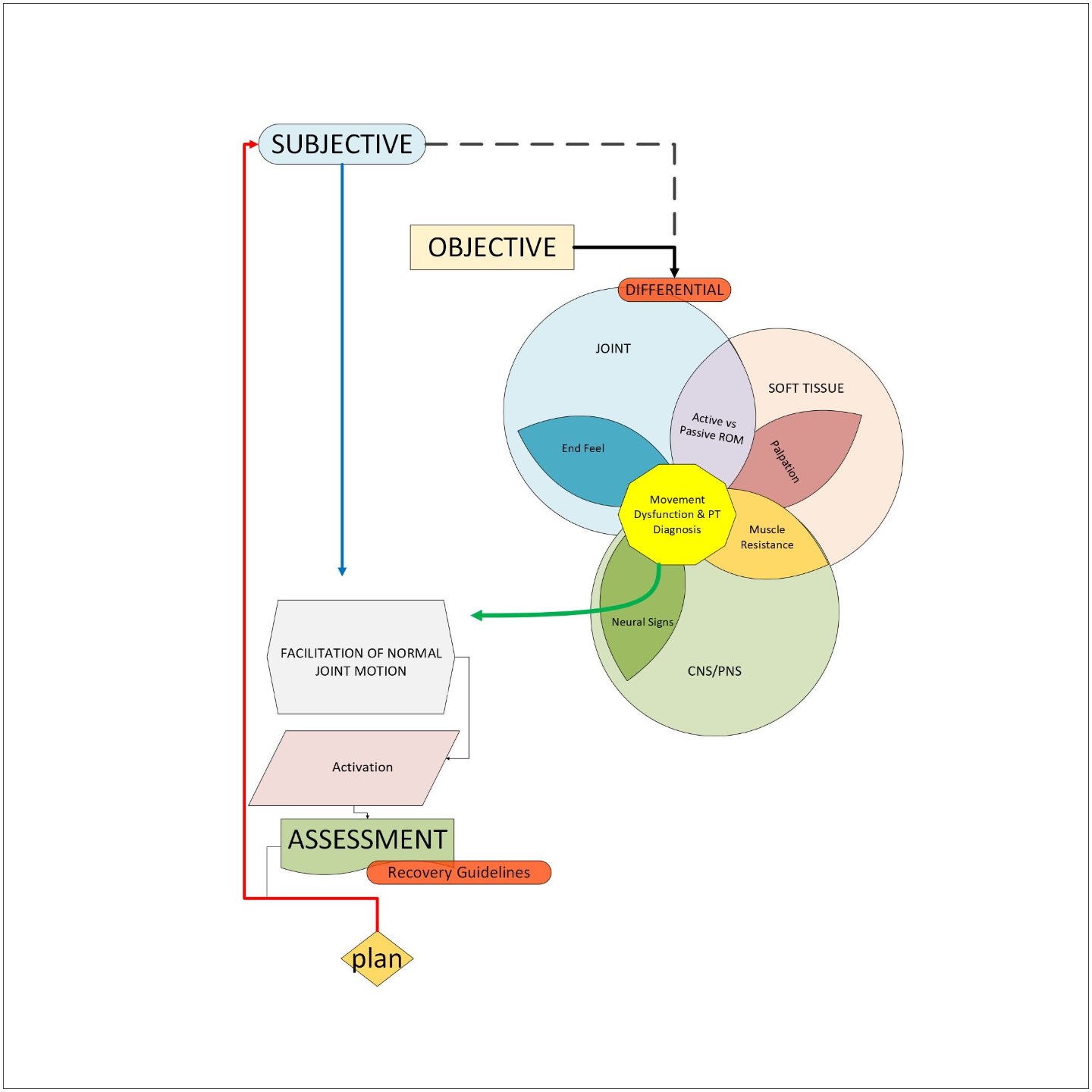
A diagram of your F.A.S.T visit. We are going to focus on the RED line in this tutorial - where to STOP and when to START.
We are actually going to start at the bottom of the diagram. You have evaluated, found your differentials, facilitated normal joint motion and seen a change in movement and irritation. The one sentence story has been addressed.
NOW STOP:
This is very important. You are going to stop when you have addressed the one sentence story. You are going to stop when you and the client are on the same page with change. This means that if you facilitate normal joint motion, the pain decreases in intensity, the motion increases and the functional ability increases and you both agree, this is where you STOP. It does not matter what the clock says! STOP. You will feel like you are stopping too soon. Still just STOP!
Now you will teach RECOVERY GUIDELINES.
this is how you will set yourself up for a successful START to your follow-up.
You will teach that as pain gets better:
The Intensity decreases
The frequency decreases
Irritation gets more specific (sometimes this leads to more intensity for just a moment)
And as irritation decreases activity level increases.
YOU WILL TEACH YOUR CLIENT TO MONITOR THIS AT HOME FOR CHANGE.
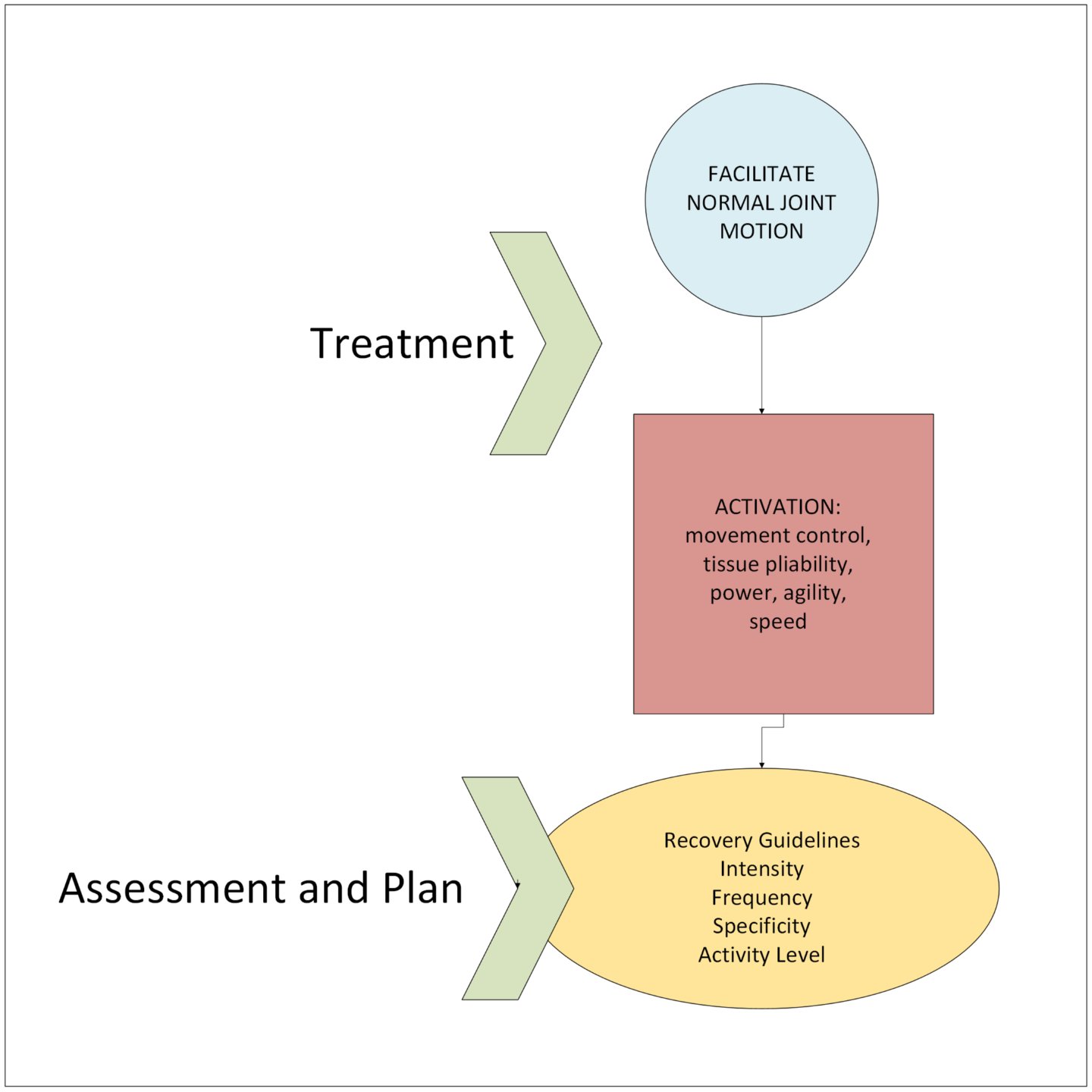
NOW STOP. THIS IS WHERE YOU END. YOU SAY YOUR GOODBYES AND YOU HAVE THE CLIENT SCHEDULE A FOLLOW-UP. You create your plan - (address mechanical dysfunction, assess and address movement control...etc.)
this is very important. You STOP when you and the client are on the same page and the client knows exactly how to monitor change. You also now have a plan for follow-up visits. The client is satisfied.
START: Follow-Up Visit
You will begin your subjective with a review of the RECOVERY GUIDELINES.
How are you?
So it sounds like sleep is easier.....
It sounds like the irritation is less intense....
How is exercise?
It looks like the irritation is more specific......
KEEP NOTES OF THE CHANGES BECAUSE THIS IS HOW YOUR ONE SENTENCE STORY IS CHANGING.
AND THESE CHANGES GUIDE THE TRANSFORMATION OF YOUR TREATMENT - less facilitation, more activation.
TREATMENT PROGRESSES WITH CHANGE
Assess and address the mechanical dysfunction. (Note the change.)
Activation as Appropriate.
Neuromotor Control
Tissue Pliability
Power
Agility
REVIEW RECOVERY GUIDELINES
STOP
One Sentence Story
Differential(s)
Facilitation of Normal Joint Movement
Referral (Yes or No)
Activation: Increase tissue pliability as appropriate / Motor Control as appropriate
STOP
Recovery Guidelines
STOP
Plan
START: review changes in recovery guidelines at follow-up visit